Net Metering in Pakistan: A 2026 Homeowner Guide
Net metering in Pakistan has quietly become the single biggest reason households and small businesses are switching to solar in 2026. Instead of letting extra daytime power go to waste, a net metering connection lets you export surplus units to the national grid and receive credit against your monthly bill. For families tired of rising tariffs and unpredictable load shedding, this policy turns a rooftop system into a long-term savings machine.
This guide breaks down how net metering actually works, what it costs, how the approval process runs, and how to avoid the mistakes that delay so many applications. If you have been putting off a decision, understanding these details will help you move forward with confidence.
How Net Metering Works in Pakistan
Net metering is a billing arrangement approved by the National Electric Power Regulatory Authority. Your solar system feeds power into your home first. Any surplus flows back into the grid through a bidirectional meter that records both import and export units.
At the end of the billing cycle, your distribution company nets the exported units against the units you imported at night or on cloudy days. If you export more than you consume, the extra credits roll forward to future months. This is what makes a properly sized grid-tied system so attractive.
The core components you need
- Solar panels sized to cover your daytime and banked consumption.
- A grid-tie or hybrid inverter that meets safety and anti-islanding standards.
- A bidirectional (net) meter installed by your distribution company.
- Proper earthing, protection devices, and compliant wiring.
Eligibility currently covers connections from 1 kW up to 1 MW on a three-phase supply, which comfortably includes almost every home and most small commercial setups. You can review the official framework directly through NEPRA, the regulator that governs these rules.
What Net Metering Costs in 2026
The economics depend on your system size, the equipment tier you choose, and your city. Below is a realistic snapshot of common residential configurations and their approximate value in 2026.
| System Size | Typical Home | Approx. Monthly Units | Best For |
|---|---|---|---|
| 5 kW | 2 to 3 bedrooms | 600 to 750 | Small family, moderate ACs |
| 10 kW | Large home | 1,200 to 1,500 | Multiple ACs, full load |
| 15 kW | Villa or small office | 1,800 to 2,200 | Heavy cooling, shops |
Payback periods have shortened noticeably as grid tariffs climbed. Many homeowners now recover their investment in roughly three to five years, after which the electricity is effectively free for the remaining life of the panels.
Where the savings really come from
- Offsetting expensive peak-hour tariff slabs during the day.
- Banking surplus summer generation for use in winter.
- Reducing exposure to future tariff increases.
- Cutting reliance on fuel-hungry backup generators.
The Net Metering Approval Process
The paperwork intimidates people more than it should. A competent installer handles most of it for you, but knowing the sequence helps you keep the project on track.
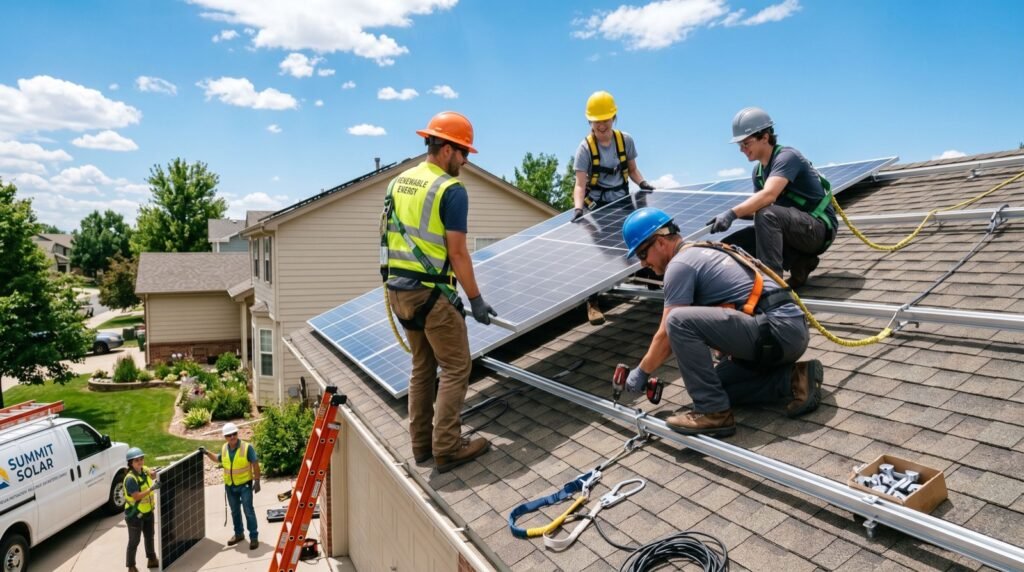
First, you submit an application to your distribution company along with your electricity bill, CNIC, and a single-line diagram of the proposed system. After a technical feasibility review, an inspection team visits to verify the installation and safety compliance.
Once cleared, the utility issues a net metering agreement and installs the bidirectional meter. From start to finish the process often takes several weeks, and choosing dependable specialists is the difference between a smooth approval and months of back-and-forth.
Common reasons applications get delayed
- Undersized or mismatched inverter documentation.
- Incomplete single-line diagrams or missing signatures.
- Load sanction lower than the requested export capacity.
- Non-compliant earthing or protection equipment.
Choosing the Right Installer
Equipment matters, but the installer matters more. A quality vendor sizes the system to your actual consumption pattern, uses inverters that pass anti-islanding tests, and stands behind the workmanship long after commissioning.
Regional expertise counts too, because grid conditions, rooftop styles, and distribution-company procedures vary across the country. Homeowners in the twin cities region often look for an experienced solar company in Rawalpindi that already understands local IESCO paperwork and inspection expectations.
In the southwest, harsher sun and dust demand robust mounting and cleaning schedules, so buyers researching solar panels in Quetta should prioritise durable panels and installers familiar with high-altitude conditions.
Questions to ask before signing
- Will you handle the full net metering application on my behalf?
- What panel and inverter warranties are included in writing?
- Can you share references from recent installations near me?
- What happens if my meter approval is rejected?
Maintenance and Long-Term Performance
A grid-tied system is refreshingly low maintenance. The main task is keeping the panels clean, since dust and bird droppings can shave several percent off output. A quick rinse every few weeks in dry seasons keeps generation strong.
Monitor your inverter app for sudden drops in production, which can flag shading, a loose connection, or a failing string. Global data from the International Energy Agency confirms that well-maintained solar PV routinely performs for 25 years or more, so treating the system with care protects decades of savings.
Sizing Your System for Maximum Credit
Getting the most from net metering depends on matching your export capacity to your real consumption pattern. Oversizing wastes money on units you cannot bank efficiently, while undersizing leaves savings on the table.
Start by reviewing twelve months of electricity bills to understand your seasonal peaks. Homes with heavy summer cooling benefit from a larger array that builds credits during long sunny days, which then offset winter nights.
Practical sizing tips
- Base the system on annual, not monthly, consumption to smooth seasonal swings.
- Confirm your sanctioned load supports the export capacity you want.
- Leave modest headroom if you expect to add ACs or electric appliances.
- Prefer tier-one panels that hold output over a 25-year life.
A well-sized system keeps your meter running backwards for as many daylight hours as possible, which is exactly where the long-term value of net metering lives.
Frequently Asked Questions
Is net metering in Pakistan still worth it in 2026?
Yes. With grid tariffs rising and payback periods shrinking to a few years, net metering remains one of the strongest household investments available, especially for homes with high daytime and cooling loads.
Do I get cash for the units I export?
The current model gives you unit credits rather than cash. Exported units offset your imported units, and any surplus carries forward to reduce future bills within the settlement rules.
How long does net metering approval take?
Most residential applications are completed within several weeks once documents are complete. Delays usually come from paperwork errors, so an experienced installer speeds things up considerably.
Can I add batteries to a net metering system?
Yes, a hybrid inverter lets you combine net metering with battery backup so you keep power during outages while still exporting surplus to the grid during the day.
Final Thoughts
Net metering in Pakistan has moved from a niche perk to a mainstream financial decision in 2026. It shields your household from tariff shocks, shortens payback, and turns your roof into a productive asset for decades. The key is pairing the right system size with an installer who handles the approval process cleanly. Get a proper site assessment, compare written quotes, and take the step toward lower bills and reliable power today.