Queue Management System in Saudi Arabia: A 2026 Guide to Faster Service
Waiting in line is the one experience customers remember long after they leave. In fast-growing cities like Riyadh, Jeddah, and Dammam, a modern queue management system in saudi arabia has become the quiet engine behind shorter waits, happier visitors, and measurable efficiency gains. As the Kingdom pushes its service economy forward in 2026, organizations are rethinking how people flow through branches, clinics, and government counters.
This guide breaks down what these systems do, why they matter for Saudi businesses right now, and how to choose one that fits your floor plan, your staff, and your customers.
What Is a Queue Management System?
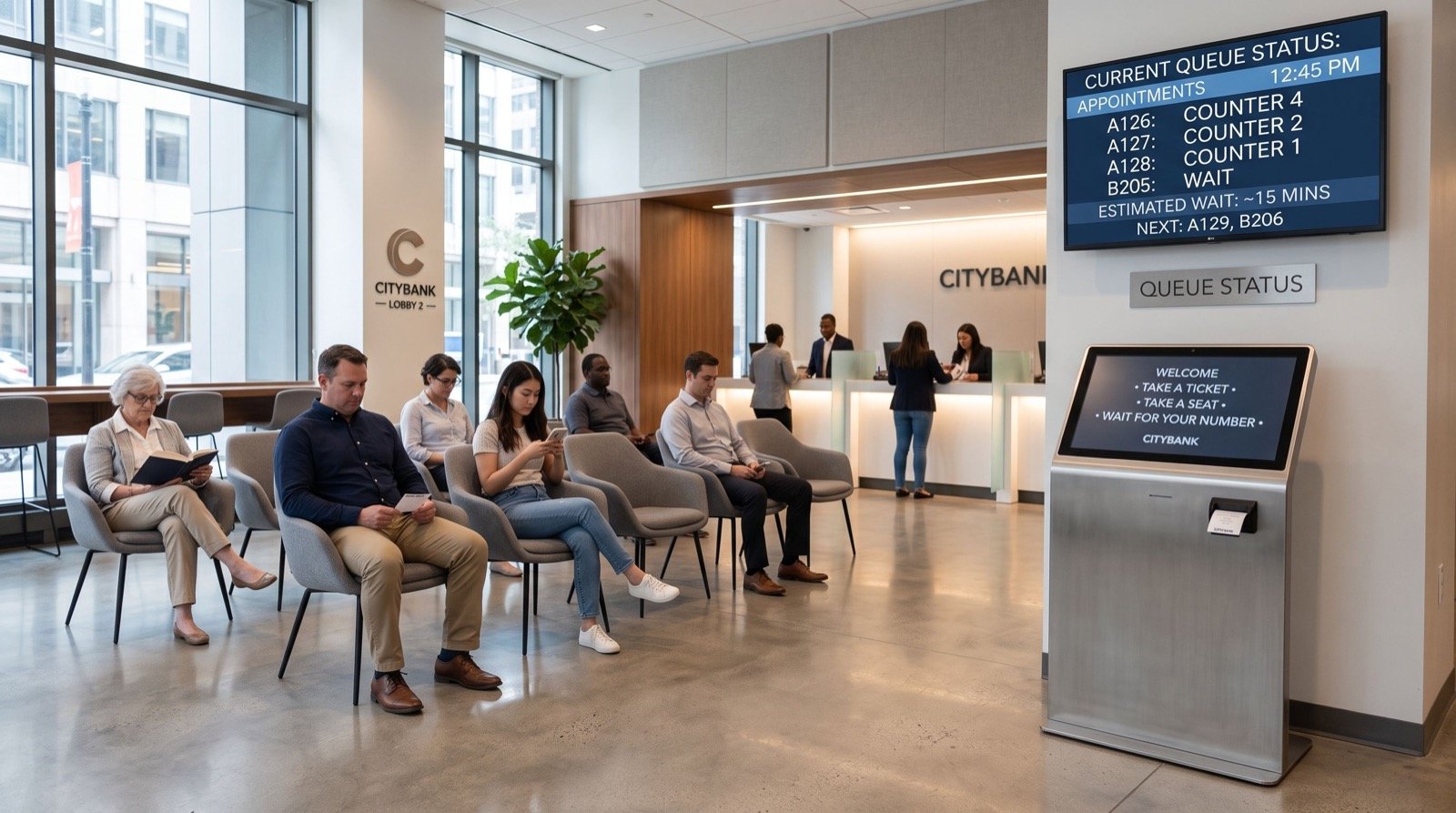
A queue management system is a mix of hardware and software that organizes how customers are served. Instead of a crowded, first-come chaos at the counter, visitors take a ticket, pick a service, and wait comfortably until their number appears on a screen.
Behind the scenes, the platform tracks every interaction. It records wait times, service duration, peak hours, and staff performance. That data turns a guessing game into a strategy you can actually manage.
- Ticketing kiosks that let visitors self-select a service in Arabic or English.
- Digital signage that calls the next number and reduces confusion.
- Mobile and virtual queuing so people wait from a chair, a car, or a café.
- Dashboards that give managers live visibility into every branch.
Why a Queue Management System in Saudi Arabia Matters in 2026
Saudi Arabia is investing heavily in customer experience as part of its national transformation goals. The government’s own Vision 2030 program prioritizes efficient public services and a thriving private sector, and smooth service delivery sits at the center of that promise.
Banks, telecom stores, hospitals, and municipal offices all face the same pressure: serve more people without making them wait longer. A well-deployed queueing platform answers that pressure directly.
Consider the ripple effects. A shorter wait improves satisfaction scores. Better scheduling lowers staff overtime. Clean data helps you decide whether a branch needs one more teller or one fewer. These outcomes compound over a year into real savings.
How Much Time Do Queues Really Cost?
Research on consumer behavior consistently shows that perceived waiting feels longer than actual waiting, and abandoned queues translate into lost revenue. When customers can see their position and an estimated wait, frustration drops sharply even if the clock reads the same.
In retail and fast-service settings, the stakes climb higher. A poorly managed drive-through lane, for example, can bottleneck an entire site during lunch rush.
Where These Systems Deliver the Biggest Wins
Not every environment needs the same setup. The right design depends on how customers arrive and what they need. Below is a quick comparison of common Saudi deployment scenarios.
| Sector | Primary Goal | Best-Fit Feature |
|---|---|---|
| Banking | Reduce teller congestion | Appointment booking + priority tickets |
| Healthcare | Calm, orderly waiting areas | Virtual mobile queuing |
| Government | Serve high daily volume | Multi-service kiosks in Arabic/English |
| Retail & QSR | Speed at peak hours | Drive-thru and counter integration |
| Telecom | Manage complex requests | Staff performance analytics |
Quick-service restaurants deserve a special mention. Pairing an in-store queue platform with a dedicated HME Drive Thru in Riyadh setup keeps both the counter and the lane moving, so neither channel steals staff from the other.
Key Features to Look For
When you evaluate vendors, resist the urge to chase the longest feature list. Focus instead on what your team will actually use every day.
- Bilingual interfaces. Arabic and English support is non-negotiable for most Saudi venues.
- Real-time dashboards. Managers should spot a backlog before customers complain.
- Mobile ticketing. Letting visitors join remotely frees up physical space.
- Reporting and exports. Historical data drives smarter staffing decisions.
- Scalability. A single branch today may become twenty next year.
One practical tip from the field: run a two-week baseline measurement before you change anything. Capture current wait and service times manually. Once the system goes live, the before-and-after numbers make the investment easy to justify to leadership.
Implementation: A Simple Roadmap
Rolling out a queueing platform does not have to disrupt operations. A phased approach keeps risk low and adoption high.
Start with a single pilot branch. Train a small group of staff, gather their feedback, and refine the service menu. Only then expand to the wider network with a proven template.
Integration matters too. The best results come when the queue platform talks to your CRM, appointment tools, and signage. If you lack an in-house team, partnering with dependable specialists can shorten the learning curve considerably.
Common Mistakes to Avoid
- Buying more kiosks than your lobby can physically fit.
- Ignoring staff training, which stalls adoption on day one.
- Skipping the analytics module to save money, then flying blind.
- Forgetting accessibility for elderly and disabled visitors.
Measuring Return on Investment
The clearest ROI signal is the shrinking gap between arrival and service. Track average wait time, abandonment rate, and customer satisfaction weekly. Most Saudi deployments see meaningful improvements within the first quarter of use.
Beyond the numbers, there is a reputation dividend. In a market where word of mouth travels fast, a calm, organized branch quietly builds loyalty that advertising cannot buy.
Frequently Asked Questions
How long does it take to install a queue management system in Saudi Arabia?
A single-branch pilot can go live within one to two weeks, including hardware setup and staff training. Multi-site rollouts typically phase in over a few months to keep operations stable.
Can customers join the queue from their phones?
Yes. Modern platforms offer virtual and mobile queuing, so visitors receive a ticket by QR code or app and wait wherever they like until their turn approaches.
Does the system support both Arabic and English?
Reputable systems built for the Saudi market offer full bilingual interfaces on kiosks, screens, and reports, which is essential for serving a diverse customer base.
Is a queue system worth it for a small branch?
Often yes. Even a compact setup reduces crowding, captures useful data, and signals professionalism. The analytics alone frequently pay for the system within months.
Integrating With the Wider Customer Journey
A queue platform works best when it connects to the rest of your operation. Linking it to appointment booking, feedback surveys, and digital signage turns isolated tickets into a joined-up experience.
Picture a customer who books online, receives a reminder, checks in by phone on arrival, and rates the visit before leaving. Every step feeds data back to managers, who can then fine-tune staffing and service menus with confidence.
This is where many Saudi organizations find unexpected value. The queue system becomes less a line-management tool and more a listening post for the entire customer relationship.
Final Thoughts
In 2026, customer patience is thinner and expectations are higher than ever. A thoughtfully chosen queue management system in saudi arabia turns waiting from a liability into a managed, measurable part of your service. Start small, measure honestly, and let the data guide your growth. The branches that organize the wait today will own customer loyalty tomorrow.